
Distance Makes the Heart Grow Fonder
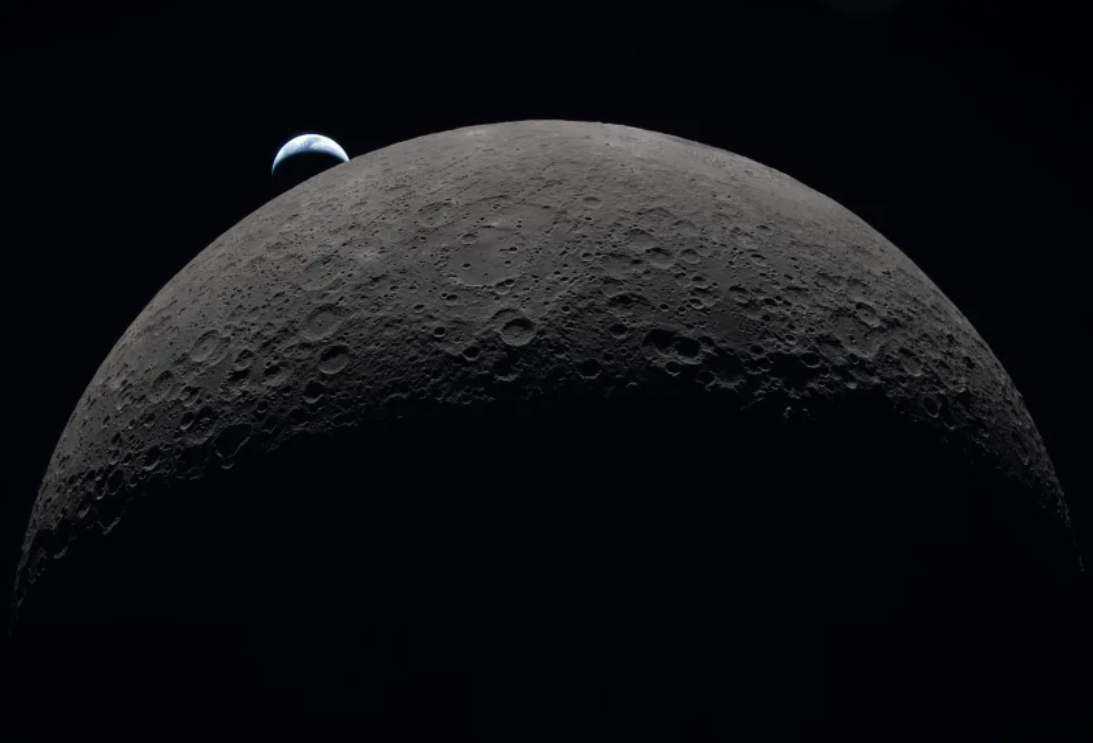
After landing on the moon over 50 years ago, humanity is back at their intergalactic shenanigans with Artemis II. NASA’s latest moon mission, the Artemis Program, has been in discussion since 2011, long before the world was turned upside down with several historical events. Artemis’ planned second run around the moon was launched with perfect timing, commencing their decades-old mission just as civilization seems to be crumbling. Consequently, Artemis II has become a beacon of hope for all of humanity in these increasingly dark times. The internet would suggest that the mental well being of the general populus hinges on positive reports of this moon trek.
“Close enough, welcome back 1968.”
Via galactic.greaser
The Apollo 11 mission in the late 1960s, where man walked on the moon for the first time, also came during a tumultuous time in society. Similarly, back then, the world was afire with social disruption, violence, and antiwar sentiments. However, when NASA broadcasted never before seen photos of our world from afar, it shook everyone. The astronauts landing on the moon didn’t bring wars to an end or solve all the problems occurring, but for many, it was a wakeup call to the fragility and uniqueness of a planet that we all call home.
In mythology, Artemis is the twin sister of Apollo, and despite being divine twins with different aims, they both sought to protect their mother, Leto. Here, the symbolism is undeniable, as both the Artemis and Apollo space missions ultimately reflect a reverie for Mother Earth, just like the astronauts do.
Artemis II’s journey is groundbreaking in many ways and has the most diverse space crew every. Their pilot, Victor Glover is the first Black man to go to the moon; and crew member Christina Koch, is the first woman. They both have often shared their opinions on unity and diversity from the cockpit of their spaceship. Plus, this crew has flown farther from Earth than anyone else in human history. Instead of highlighting their achievements with trophies and visions of valor, however ,the crew has humbly focused on their beloved connections back home. When they discovered a new lunar crater, they requested to name it “Carroll,” after the commander’s late wife who recently passed from cancer leaving him and his two children. Livestreaming their entire experience, the crew shared an emotional moment of tears and a heartwarming group hug. They beautifully showcased their humanity and that even us earth-locked stargazers can relate to these brave cosmic explorers. Perhaps space is what will help us realize that being vulnerable is not something to hide.
Regardless of political views or personal sentiments, every human being lives on this floating oasis in space, and there’s something beautifully unifying about that. If living on some space rock is the one thing every human being has in common, maybe there’s hope that the petty bickerings of mankind could find some common ground as well.
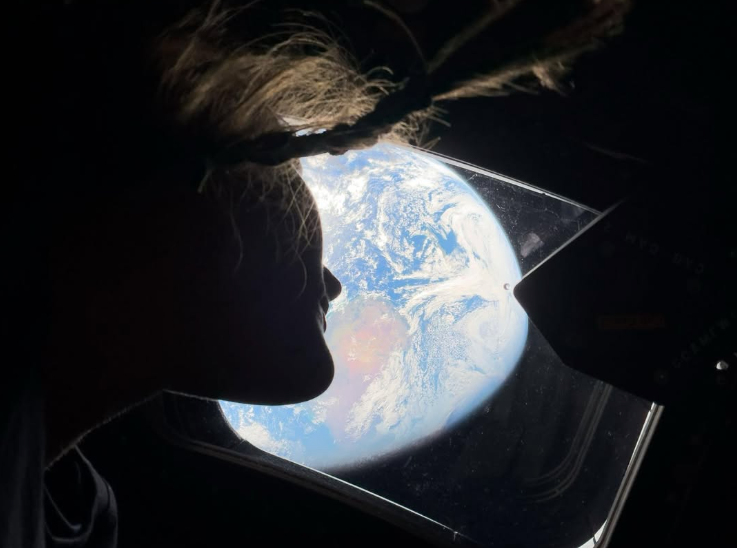
Via astro_christina
As you can imagine, humanity is facing much of the same 60s-era problems right now with increasing tensions all over the world, socially, economically, and politically. Yet, like Apollo 11, the good news of Artemis II has swept the newsfeeds. It has taken over the negativity of the public eye with a glimmer of hope, coalition, and undeniable, interstellar epicness from a new frame of reference.
We Need Some Space
Humans have long since been obsessed with space.
If you’ve spent one night in the great outdoors, where light pollution is minimal and the siren cries of the city are far away, the moon and stars are the only pinpricks of light that twinkle in silence overhead. Stars, planets, satellites, and visions of entire galaxies can be seen from the humble crust of Earth and sparkle-seeking humans have been dazzled by the celestial bodies for millennia. According to the European Space Association, astronomical observations date back to the Assyro-Babylonians in Mesopotamia around 1000 BCE. Early astronomers built up knowledge of celestial forms and recorded their periodic motions, but they had no idea how far away, or how complex the stars and the planets were.
This fascination with astronomy exists in every major early civilization and the awe and the mysteries of space have only magnified over time.
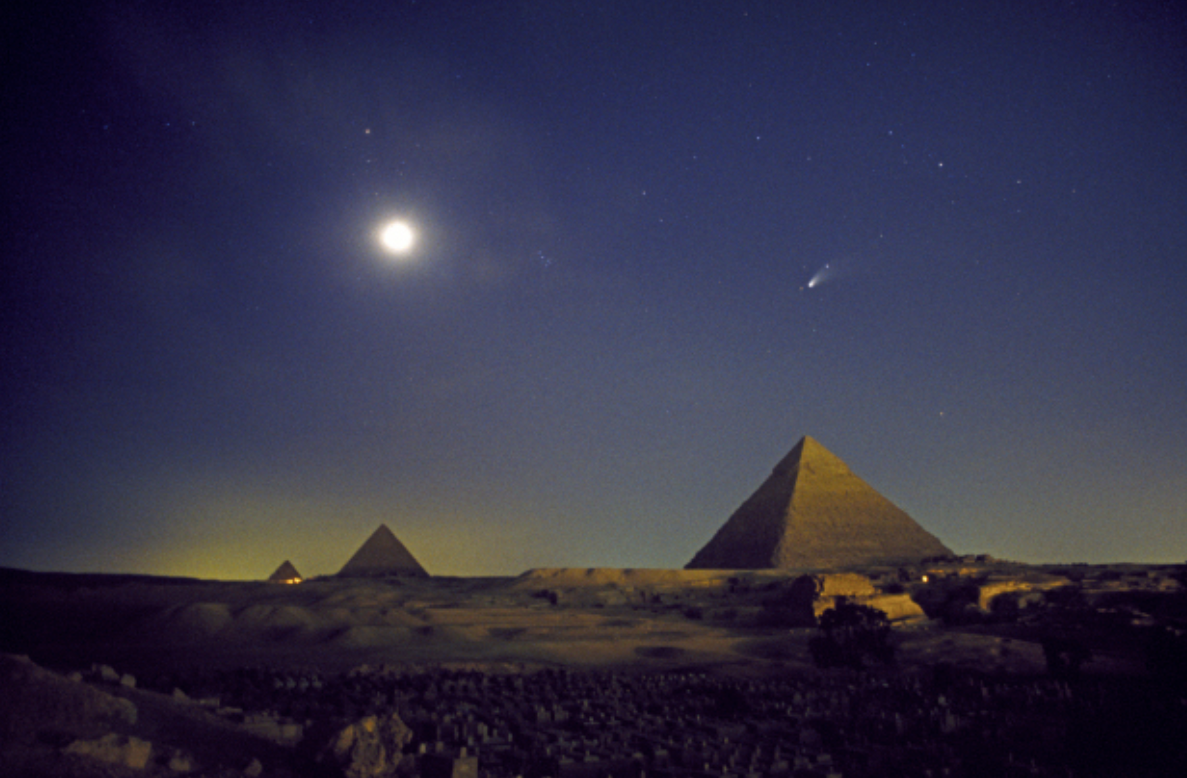
Via John Goldsmith
For thousands of years, humankind has been developing science and technology to deepen their understanding of the great beyond. Astroscience has proven to be one of the more complicated sciences, thus creating legendary discoveries and breakthroughs. The more humans discover about space, the more they realize that humanity knows so little. Space represents a whole galaxy of unknowns that makes even the wisest, most renowned scholars question everything. Questions lead to a greater understanding of not only our planet, but of the entire universe, provoking discussion across all fields of academia: physics, philosophy, ethics, economy, medicine, biology, and the entire essence of humanity.
Makes a person feel kind of small, doesn’t it?
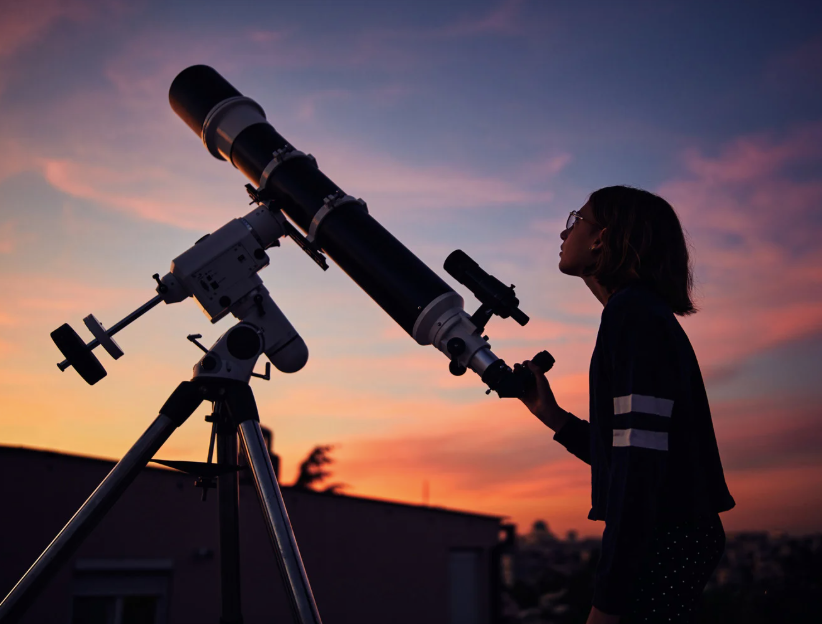
Via m-gucci
It’s for this reason that space is so unifying.
Although in the past, countries have competed over the “firsts” and the “farthest” space expeditions, ultimately, the discoveries made on any country’s treks have unified humanity. Through collaboration and mutual fascination, humans come together when studying space and these alliances give mankind hope for a peaceful, cooperative future in other areas.
Oasis in the Cosmos
One of the astronauts from the Artemis II mission, Victor Glover shared a powerful reflection of the state of the world from the perspective of deep space. He said, “From up here you look like one thing. Homosapiens are all of us, no matter where you are from or what you look like, we’re all one people.”
While strife will always persist across the globe, space exploration gives everyone a wink of hope that, on our floating blue oasis in the void of the universe, humanity can find common ground to look up, up, and away, dreaming of the possibilities of galactic infinity.

Via Victor Glover and puberty